
In this guide
- What is the average litter size for dogs?
- How many puppies do popular breeds have?
- How many puppies can a Golden Retriever have?
- How many puppies can a German Shepherd have?
- How many puppies will a Yorkie or Shih Tzu have?
- What decides how many puppies a dog has?
- How can you tell how many puppies are coming?
- What about a singleton litter or two sires?
- Frequently asked questions
- The Bottom Line
Ask ten dog owners how big their last litter was and you will hear ten different numbers. A Yorkie owner might count three. A Golden Retriever owner might count ten and still be rearranging the whelping box. Both are completely normal.
Dog litters vary that much because breed size, the mother's age, her health and her genetics all pull on the final count. This guide gives you the numbers for the breeds people ask about most, explains what pushes a litter up or down, and covers the two situations that catch owners off guard: the singleton litter and the dual sired litter. If you are still planning your first breeding, Petsfindly's dog breeding guide is a good place to start.
Key takeaways
Size sets the range
Toy breeds average about three puppies, while large breeds usually land between seven and nine.
Goldens and GSDs: about 8
AKC data puts both breeds at an average of eight, and a Golden's first litter is often smaller.
Age matters
Very young and older mothers tend to have fewer puppies, and the drop is steeper in large breeds.
Count before day 63
An X-ray from about day 55 of pregnancy gives the most accurate puppy count.
What is the average litter size for dogs?
Five to six puppies, give or take quite a lot
According to the American Kennel Club, a normal litter can be anywhere from one to 12 puppies, and five to six is the average litter size across all dogs. That average hides a huge spread, so it is only useful as a starting point.
The best large scale data comes from a Norwegian study of 10,810 litters across 224 breeds. It found an overall mean of 5.4 puppies per litter and named breed size as the single biggest influence. Litters rose from about 3.5 puppies in miniature breeds to about 7.1 in giant breeds.
That gap is the whole story of small vs large breed litters. A bigger dog simply has more room to carry puppies safely, which is why a Toy Poodle and a Rottweiler can both be healthy, normal mothers with very different whelping boxes.
How many puppies do popular breeds have?
Averages for the breeds people ask about most
The table below pulls together AKC breed averages plus published figures for two popular toy breeds the AKC does not list. Use the average as your planning number and the range as your reality check.
Table 1. Average litter size by breed
Breed | Size | Average litter | Typical range | Largest reported |
|---|---|---|---|---|
Toy Poodle | Toy | 3 | Not reported | 16 (all Poodles) |
French Bulldog | Small | 3 | 2 to 4 | 7 |
Yorkshire Terrier | Toy | About 4 | Not reported | Not reported |
Shih Tzu | Toy | Not published | 3 to 6 most common | Not reported |
Bulldog | Medium | 4 | 3 to 4 | 16 |
Miniature Poodle | Small | 5 | Not reported | 16 (all Poodles) |
Dachshund | Small | 5 | 1 to 6 | 8+ |
Beagle | Medium | 6 | 1 to 10 | 13 |
Labrador Retriever | Large | 7 | 5 to 10 | 15 |
Standard Poodle | Large | 7 | Not reported | 16 (all Poodles) |
Golden Retriever | Large | 8 | 4 to 12 | 17 |
German Shepherd Dog | Large | 8 | 1 to 15 | 17 |
Rottweiler | Large | 8 | 6 to 12 | 18 |
German Shorthaired Pointer | Large | 9 | 8 to 12 | 15+ |
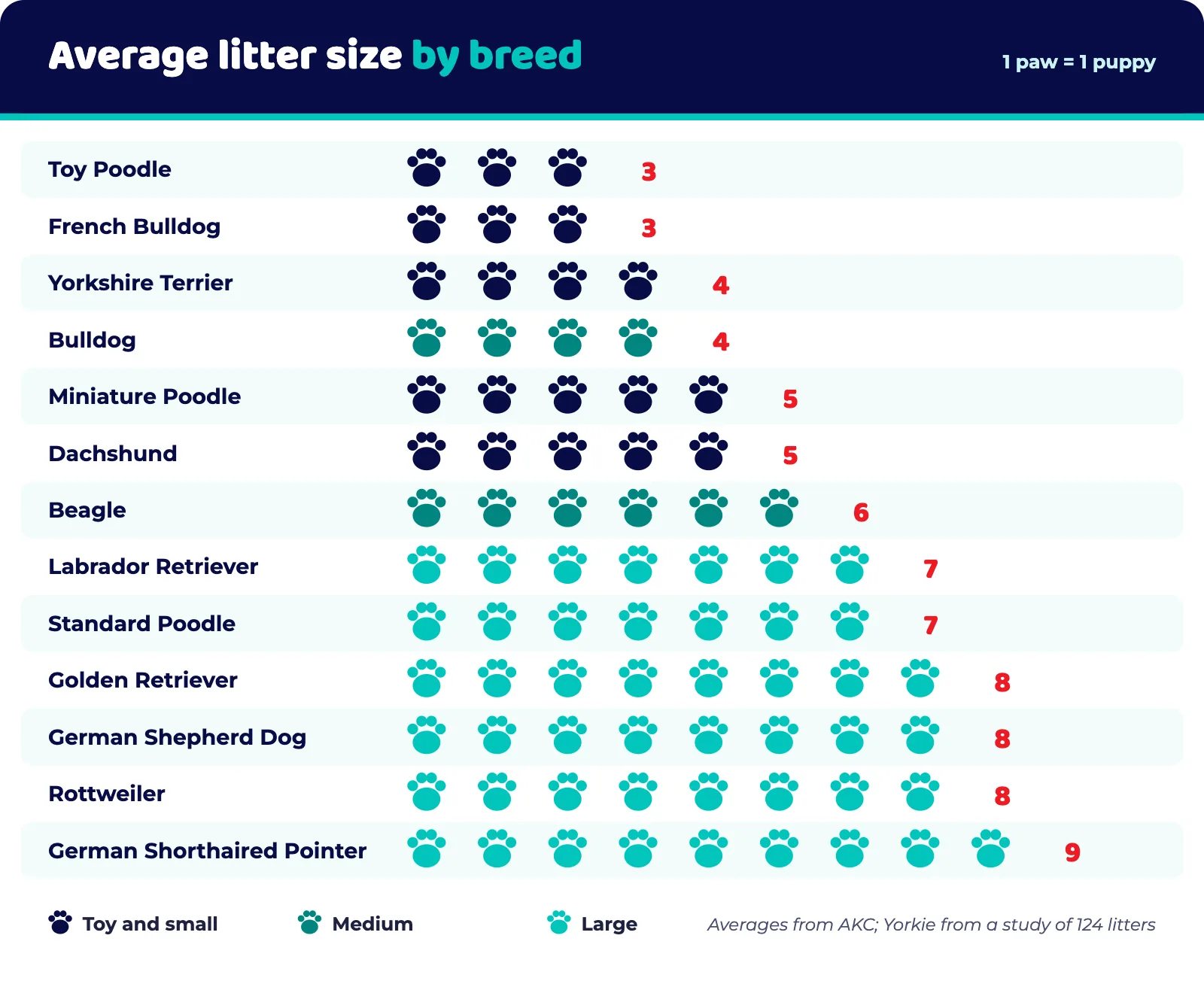
Notice how neatly the paws climb with body size. Small and toy breeds cluster at three to five, medium breeds sit around five to six, and large breeds run seven to nine. You can explore breed profiles for the Labrador Retriever, French Bulldog and Poodle to see how owners in each breed share health results.
How many puppies can a Golden Retriever have?
Eight on average, with four to 12 being normal
Here is the straight answer to how many puppies can a golden retriever have: the AKC puts the average at eight, with most litters between four and 12. The largest Golden litter it reports is 17 puppies.
So when people ask how many puppies do golden retrievers have, eight is the honest middle. A big golden retriever litter of ten or more is far from rare, so plan your whelping space, time off and vet budget for the top of the range instead of the average.
What to expect from a first golden litter
The AKC notes that a Golden's first litter is usually smaller than later ones. A young mother with five puppies is not a sign that something is wrong. Every golden litter also starts with two parents, and healthy parents give the puppies the best start. Browse Golden Retriever profiles on Petsfindly to see which owners share health results.
How many puppies can a German Shepherd have?
The same average as a Golden, with a wider range
The average gsd litter size is eight puppies, according to the AKC, and a normal litter can be anywhere from one to 15. The biggest German Shepherd litter it reports is 17. So how many puppies can a german shepherd have? Plan for about eight and stay ready for a much smaller or much larger litter.
Age matters more in big breeds like this one. The Norwegian litter study found that litter size fell more steeply in older dams of large breeds than in small ones. If you have read forum answers on how many puppies german shepherd can have that promise a dozen every time, take them with a grain of salt.
The practical takeaway for anyone asking how many puppies can a german shepherd dog have is simple: breed a healthy female in her prime and talk to your vet about timing. Petsfindly explains why breeding windows are strict, and you can compare German Shepherd Dog profiles by the health results their owners share.
How many puppies will a Yorkie or Shih Tzu have?
Smaller dogs, smaller litters, more care at whelping
Yorkshire Terrier litters
If you are wondering how many puppies will a yorkie have, the best data comes from a study of 124 Yorkshire Terrier litters from 66 females in Poland. Those litters produced 508 puppies, which works out to about four per litter. The same study found that larger females had larger litters and fewer delivery problems.
So how many puppies can a yorkie terrier have? Expect a small litter, often three to five. Size matters even within the breed, which is one more reason to choose a healthy, well grown female. See Yorkshire Terrier profiles to connect with owners near you.
Shih Tzu litters
The AKC does not publish a Shih Tzu average, but a vet reviewed guide from Dogster says most litters land between three and six puppies, with up to about eight possible. That is the realistic answer to how many puppies can a shih tzu have, and to the planning question of how many puppies will a shih tzu have: prepare for three to six.
Shih Tzus have short muzzles, so ask your vet early whether a planned C-section makes sense for your female. You can browse Shih Tzu profiles on Petsfindly by the health information owners share.
What decides how many puppies a dog has?
Size leads, but age, health and timing all play a part
Breed size sets the range, but within any breed the final count depends on the individual mother and how the breeding was handled. Here is how each factor stacks up.
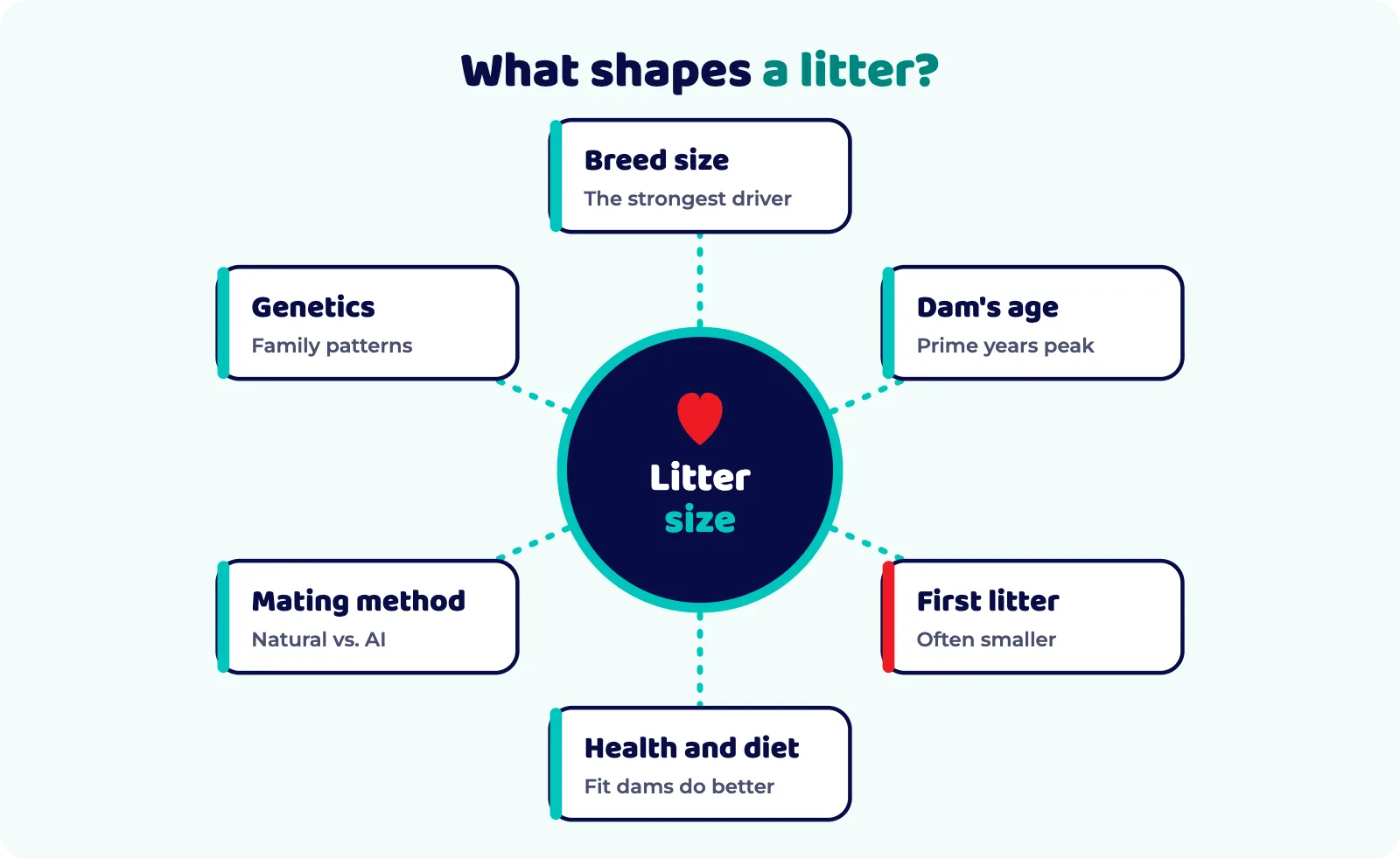
Table 2. What moves litter size up or down
Factor | What the evidence says | What you can do |
|---|---|---|
Breed size | The strongest factor in a study of 10,810 litters. Bigger breeds have more room to carry puppies safely. | Set expectations from your breed's average, not from another breed's. |
Dam's age | Very young and older mothers tend to have fewer puppies. Older large breed dams showed the steepest drop. | Breed during her prime years and respect sensible age windows. |
First litter | AKC notes that first litters are usually smaller in Labradors and Goldens. | Do not judge a young mother by her first litter alone. |
Health and diet | Healthy, disease free mothers tend to have larger litters, and nutrition plays a part. | Book a pre-breeding vet exam and feed a diet your vet approves. |
Mating method and timing | Natural mating tends to produce larger litters than artificial insemination. | Use progesterone testing with your vet to time the breeding. |
Genetics | Some dogs are simply more likely to have large litters. AKC notes Beagle litter size tends to be consistent for each mother. | Ask about litter sizes in the dam's own family line. |
Dam age and litter size
The link between dam age and litter size is one of the clearest in the research. PetMD's veterinarian written guide notes that very young and very old mothers tend to have fewer puppies, and the Norwegian study found the decline was steepest in older dams of large breeds. Breeding in her prime years is better for the mother and usually better for the count.
Is the first litter always smaller?
Not always. The AKC says a first litter is usually smaller in Labradors and Golden Retrievers, and PetMD puts typical first litters at about three to four puppies for small breeds and six to eight for large breeds. Yet the Norwegian study found no clear effect of the number of previous litters once age and breed were accounted for. The fair reading is that a first litter often comes in a little under the breed average, but it is no reason to write off a young mother.
How can you tell how many puppies are coming?
Four checkpoints between breeding day and whelping
Dogs are pregnant for about 62 to 64 days, according to the AKC. Knowing the count ahead of time is not just curiosity. It tells you when whelping is truly finished and when a pause means it is time to call the vet.
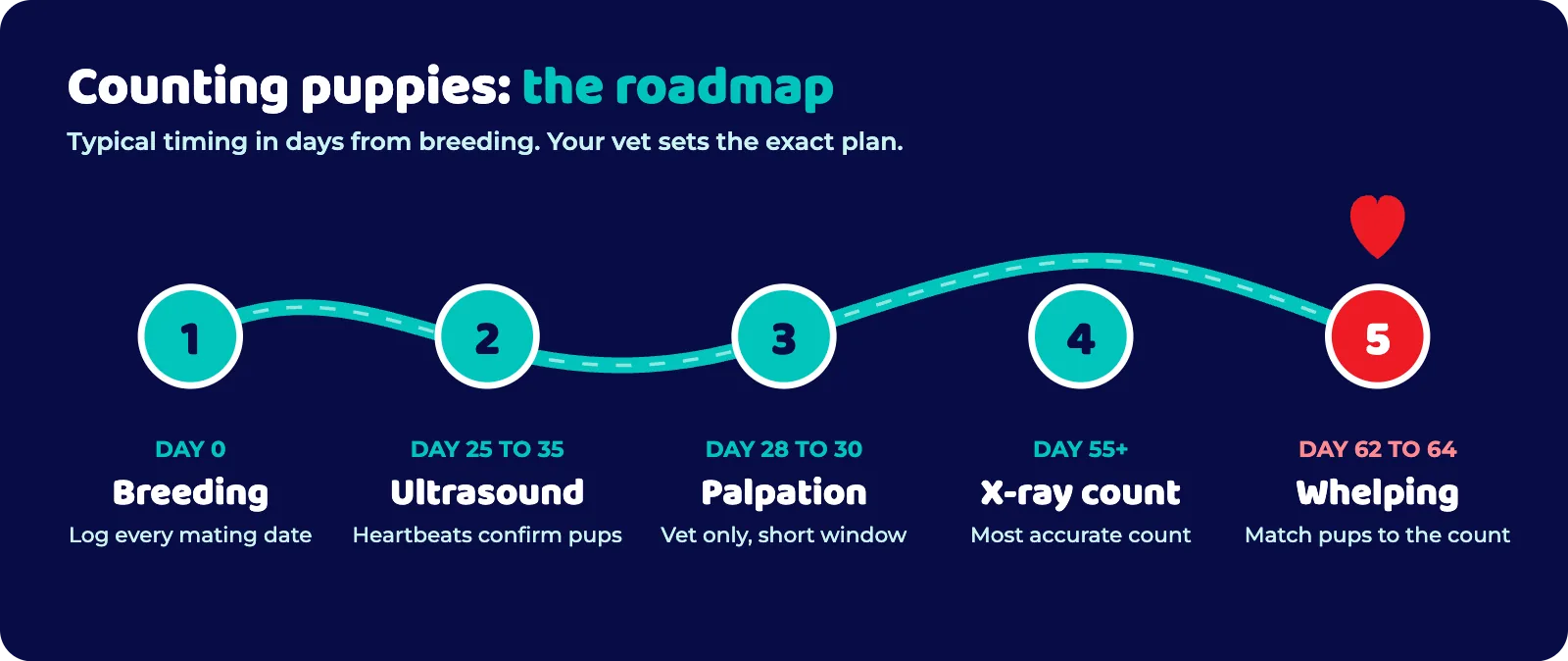
1Log every breeding date
Write down each mating date and any progesterone results. Your vet uses them to estimate the due date and to plan the scans below.
2Book an ultrasound around days 25 to 35
Ultrasound can confirm the pregnancy and pick up heartbeats, which gives an estimate of the number of puppies. Puppy heartbeats run two to three times faster than the mother's.
3Let your vet palpate around days 28 to 30
A vet can feel the fluid filled sacs for a short window. After about a month they lose their distinct shape, so timing matters. This is a job for your vet, never for you.
4Get an X-ray from day 55
Puppy skeletons show clearly on an X-ray from about day 55, so this is the most accurate count you can get before birth.
5Match the puppies to the count on whelping day
Track every puppy and every placenta as they arrive. The AKC advises calling your vet if more than two hours pass between puppies.
Table 3. Ways to count puppies before birth
Method | Typical timing | What it tells you | Good to know |
|---|---|---|---|
Ultrasound | Days 25 to 35 | Confirms pregnancy and shows heartbeats | Gives an estimate, not an exact count |
Palpation | Days 28 to 30 | Your vet feels for fluid filled sacs | Short window, and only a vet should do it |
X-ray | Day 55 or later | Shows puppy skeletons for a reliable count | Tells you when delivery is truly finished |
What about a singleton litter or two sires?
When the count is one, or the fathers are two
The singleton litter
A singleton litter is a pregnancy with just one puppy. It happens most often in small breeds, and it needs extra attention. Cornell's canine health center lists oversized puppies among the fetal causes of difficult births and names weak or absent contractions, called uterine inertia, as the most common cause overall. A single puppy has the whole uterus to itself and can grow large, so your vet may want to monitor the due date closely.
The dual sired litter
A dual sired litter is one litter with two fathers. It is possible because a female releases several eggs during her heat, so two males bred during the same cycle can each fertilize some of them. Breeders sometimes plan this on purpose, for example to add genetic variety or as backup when one male's semen quality is uncertain, as the AKC explains.
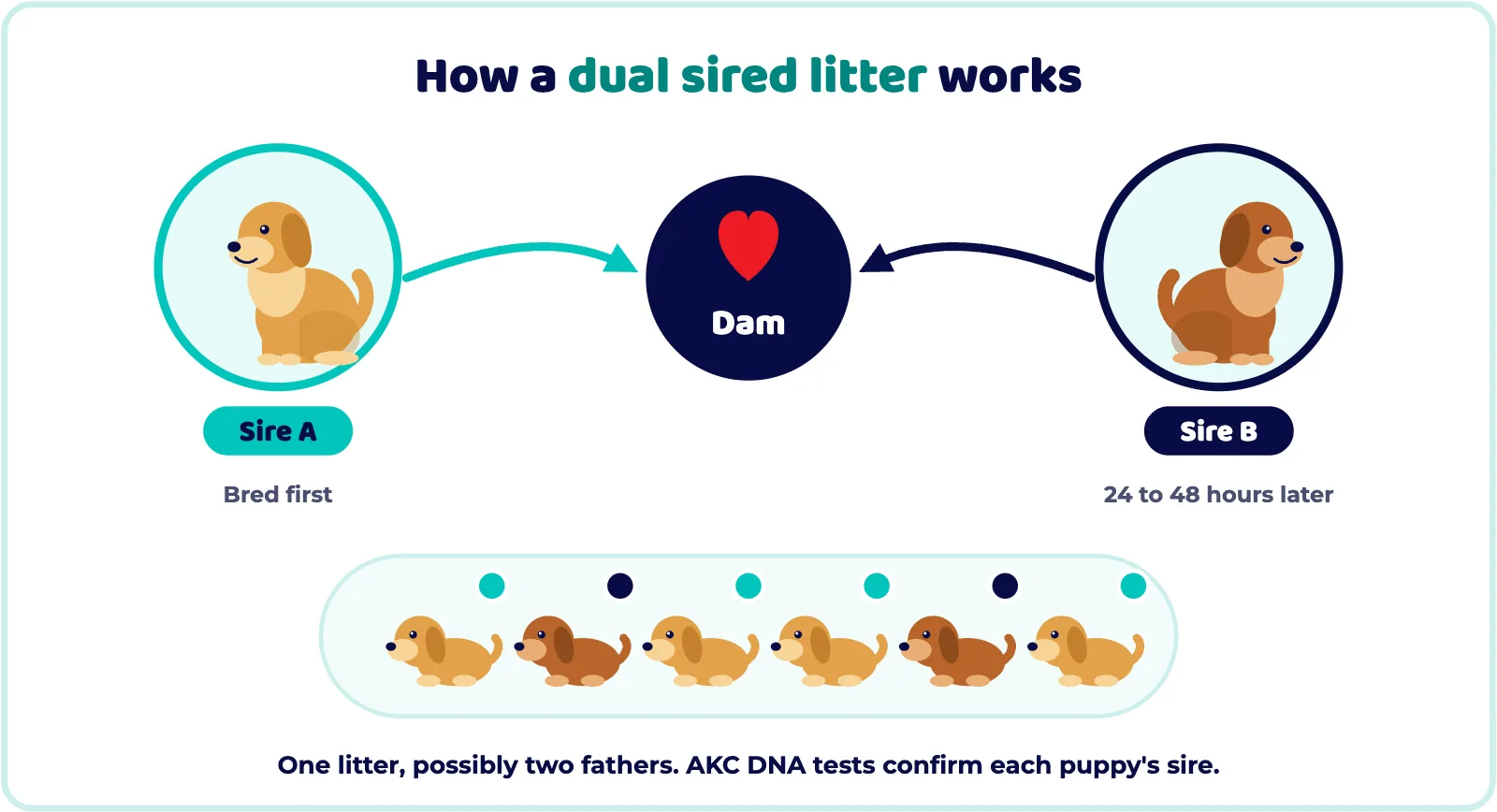
Mixed paternity is less common than people think. A Colorado State University study described by Stanley Coren in Psychology Today found that only 31% of litters bred to two sires had puppies from both. In the rest, one male fathered every puppy. Matings spaced 24 to 48 hours apart gave both males the best chance.
Frequently asked questions
Quick answers to common litter size questions
Can a dog have 20 puppies?
It is very rare. Most breeds' largest reported litters stay at 15 or fewer, and the record is 24 puppies from a Neapolitan Mastiff, according to the AKC. Litters that large need close veterinary support.
How many puppies does a German Shepherd have in her first litter?
The AKC does not publish a first litter figure for German Shepherds. PetMD notes that first time large breed mothers typically have about six to eight puppies, a little under the breed's average of eight.
Does the male affect litter size?
The mother's size, age and health drive most of the variation, because she releases the eggs and carries the puppies. The male still matters: the AKC points to semen quality, timing and breeding method as the main factors in conception.
Is a litter of two normal for a Shih Tzu?
Yes. Small breeds often have small litters, and two puppies sits just below the most common range of three to six. Ask your vet to check both puppies' size before the due date.
When can a vet tell me exactly how many puppies are coming?
An X-ray from about day 55 of pregnancy gives the most accurate count, because the puppies' skeletons are visible by then. An earlier ultrasound gives an estimate, according to the AKC.
How do I find a health-tested partner for my dog on Petsfindly?
Create a free profile, add your dog's health results and choose Breeding Partner. Members are phone-verified, owners share their own health results, and you can message without sharing your number. See how it works or try the dog mate finder.
The Bottom Line
Plan for the range, not the average
So, how many puppies can a golden retriever have? About eight, often four to 12. A German Shepherd averages the same, while a Yorkie or Shih Tzu usually has three to six. Across all dog litters, size sets the range, and the mother's age, health and first litter status decide where she lands in it.
Plan for the range, not the average. Book the ultrasound, get the day 55 X-ray, keep your vet's number on the fridge and choose a partner whose health results you have actually seen. That is how you give every puppy, whether there are two or twelve, the best possible start.
Plan your next litter
Find a health-tested partner for your breed
Petsfindly connects owners who share their dogs' health results, so you can compare breed, distance and screenings before you ever send a message. Browsing is free and your phone number stays private until you choose to share it.
- Free to browse
- Phone-verified owners
- We never take payments
Further reading
- American Kennel Club: How many puppies are in a litter?
- Borge et al., Theriogenology: Litter size at birth in purebred dogs, a study of 224 breeds
- Veterinarni Medicina: Reproductive parameters in Yorkshire Terrier dogs in Poland
- Cornell Riney Canine Health Center: Dystocia in dogs
- American Kennel Club: Dog pregnancy care and prep
- American Kennel Club: Multiple sire litter registration
- American Kennel Club: Stud double, multiple sire litters
- Psychology Today: Can puppies in the same litter have different fathers?
- PetMD: How many puppies can a dog have?
- Dogster (vet reviewed): How many puppies can a Shih Tzu have?
- Orthopedic Foundation for Animals: Frequently asked questions
This guide is general information for dog owners and is not veterinary advice. Talk to your veterinarian before making any breeding or health decision.